Tak Bat Almsgiving in Chiang Mai: How to Join Respectfully
The sky is still dark when the first monks appear. Bare feet on cold stone, saffron robes catching the faint pre-dawn light, alms bowls cradled in both hands. The street is quiet — not empty, but quiet in the way that sacred things are. Locals kneel at the roadside, offering sticky rice with two hands and lowered eyes. Nobody speaks. The only sounds are soft footsteps, the rustle of cloth, and somewhere distant, a temple bell.
This is tak bat — one of the most profound daily rituals in Southeast Asia, and one of the most quietly powerful experiences available to you in Chiang Mai.
Tak bat (also called sai bat) is the ancient Buddhist alms-giving ceremony in which monks walk through the streets at sunrise each day, collecting food offerings from locals and visitors. It's not a performance, not a tourist attraction, and not timed for convenience. It happens every single day, at sunrise, whether you're there to witness it or not. That's what makes it real.
This guide tells you exactly where to go, when to arrive, how to behave, and what to bring — so you can participate with genuine respect and walk away with something that stays with you long after you leave Chiang Mai.
Key Takeaways
- Tak bat happens every day at sunrise — approximately 5:30 AM in summer, 6:30 AM in winter
- Arrive 20–30 minutes early; bring sticky rice and fruit (budget THB 100–200 / $3–5 USD)
- Dress modestly: shoulders, knees, and chest covered — no exceptions
- Never touch a monk; kneel or sit lower than the monks when offering
- Best locations: Wat Chedi Luang (first-timers), Wat Chiang Man (authenticity), Wat Phra That Doi Suthep (photography and solitude)
- Watching is free; organized tours cost ฿875–3,500 (~$25–100 USD)
- The experience lasts 45–60 minutes — and often lingers for years
What Is Tak Bat? Understanding This Ancient Buddhist Tradition
Tak bat is a daily merit-making ritual rooted in Theravada Buddhism, the dominant tradition throughout Thailand, Laos, and Myanmar. The word "tak bat" translates roughly as "to receive alms in a bowl," while "sai bat" refers more specifically to the act of placing offerings into the monks' alms bowls. Both terms are used — often interchangeably.
The tradition dates back to the 14th century, when Theravada Buddhism spread across mainland Southeast Asia. In monastic life, monks are not permitted to grow their own food or cook for themselves. Instead, they depend entirely on the generosity of the lay community — walking out each morning to receive whatever is offered, then returning to the temple for their first and only full meal of the day. Buddhist monks typically eat just two meals per day: the morning one gathered through tak bat, and a midday meal prepared at the temple.
For the locals who give, tak bat is an act of merit-making — the accumulation of spiritual good through generosity, compassion, and respect. They believe it brings happiness, good fortune, and a more favorable rebirth. For the monks who receive, it's a practice of humility, presence, and trust in the community.
Neither side expects anything in return. That's the whole point.
Why Chiang Mai Is One of the Best Places to Experience Tak Bat
Chiang Mai is home to more than 300 temples — over 30 of them within the walls of the Old City alone. This extraordinary density means that tak bat isn't concentrated at a single location; it flows through the streets like a slow, golden river every morning, touching multiple neighborhoods simultaneously.
Compared to Luang Prabang in Laos — perhaps the most internationally famous location for tak bat — Chiang Mai offers a different kind of experience. Luang Prabang draws hundreds of monks in a single procession along the main street, which has become increasingly commercialized over the years. Chiang Mai is more distributed, more local, and arguably more authentic for that reason. You're not watching a parade; you're stepping into a living daily practice.
The city also has strong, ongoing local participation. Thai residents genuinely take part every morning, sitting by the roadsides with their offerings before the sun is fully up. You can feel the difference between a ceremony that exists for tourists and one that exists regardless of them.
When Does Tak Bat Happen? Timing and Seasonal Guide
Tak bat occurs every day of the year, without exception. It begins at sunrise — which means arrival time varies by season.
| Season | Sunrise Time | Recommended Arrival | Notes |
|---|---|---|---|
| Cool (Nov–Feb) | ~6:15–6:30 AM | 5:45–6:00 AM | Best weather, most monks, most crowded |
| Hot (Mar–May) | ~5:30 AM | 5:00–5:15 AM | Very early, hot and humid by 7 AM |
| Rainy (Jun–Oct) | ~5:45–6:00 AM | 5:15–5:30 AM | Fewer tourists, most authentic, bring umbrella |
The cool season (November–February) is the most popular window: crisp air, golden light, and the highest number of monks. December and January are peak tourist months, so the main streets fill up quickly. If you're visiting during this period, plan to go on a weekday and head toward the quieter side streets.
The rainy season (June–October) is underrated. Fewer tourists, more local presence, and a genuine feeling that this moment belongs to the community — not to a camera. You may need to navigate an umbrella, but the reward is proportional.
Special Buddhist holidays — Makha Bucha and Visakha Bucha — draw significantly more monks and local participants. If your trip coincides with these dates, tak bat will be particularly moving.
Where to Experience Tak Bat in Chiang Mai: Location Guide
Location matters enormously. The same ceremony feels different depending on where you stand.
Wat Chedi Luang — Best Overall for First-Timers
Situated on Th Phra Pokklao in the heart of the Old City, Wat Chedi Luang is the most iconic temple for tak bat. The monk participation is high, the architecture is stunning, and the logistics are easy. It's the most crowded option — but the scale is part of the experience. Go to the side streets nearby (Th Ratchadamnoen, Th Phra Pokklao) rather than positioning yourself directly in front of the temple entrance if you want a slightly quieter spot.
Best for: First-time visitors, families, photographers
Crowd level: High — arrive by 5:15 AM
Address: 103 Phra Pokklao Rd, Si Phum, Mueang District, Chiang Mai 50200
Phone: +66 (0)53-248-604
Wat Phra That Doi Suthep — Best for Authenticity and Solitude
This mountain temple sits above the city, reached by tuk-tuk or taxi in about 30 minutes. Very few tourists make the effort to come here for tak bat, which means what you find is quiet, unhurried, and deeply genuine. Add to that the view of Chiang Mai spread out below in early morning mist, and it becomes something else entirely — closer to a meditation than a sightseeing stop.
Best for: Adventurous travelers, couples, those seeking a spiritual experience
Crowd level: Very low — arrive by 5:30 AM
Transport: Arrange tuk-tuk the night before (฿280–420 (~$8–12 USD)); bring a light jacket, the mountain is cooler
Phone: +66 (0)53-295-002
Wat Chiang Man — Best for Avoiding Crowds
Built in 1296, Wat Chiang Man is the oldest temple in Chiang Mai — and one of the least visited by tourists during tak bat. The monks are relaxed, the atmosphere is intimate, and you're mostly surrounded by locals. If you want to understand what this practice feels like without the tourist layer, this is your best option within the Old City.
Best for: Solo travelers, anyone seeking authenticity, history enthusiasts
Crowd level: Very low — arrive by 5:30 AM
Address: Th Ratchaphakhinai, Mueang District, Chiang Mai 50200
Phone: +66 (0)53-814-018
Wat Phra Singh — Best for Photography
Wat Phra Singh combines beautiful Lanna-style architecture with good monk participation and proximity to Somphet Market — perfect for sunrise photography before heading to the market for breakfast. The crowd level is moderate, and the surrounding streets offer several good vantage points.
Best for: Photographers, content creators
Crowd level: Moderate
Phone: +66 (0)53-814-528
Location Comparison at a Glance
| Location | Authenticity | Crowd Level | Accessibility | Best For |
|---|---|---|---|---|
| Wat Chedi Luang (side streets) | High | Medium-High | Excellent | First-timers, photographers |
| Wat Phra That Doi Suthep | Very High | Very Low | Requires transport | Solitude, spiritual seekers |
| Wat Chiang Man | Very High | Very Low | Good | Crowd-avoiders, solo travelers |
| Wat Phra Singh | High | Medium | Excellent | Photography |
| Hotel-based experience | Medium | Very Low | Excellent | Families, elderly, beginners |
How to Join Tak Bat Respectfully: Complete Etiquette Guide
There are rules here — not because someone invented them for tourists, but because this is a living spiritual practice. Respecting them isn't just polite; it's the difference between participating and intruding.
What to Wear
Cover your shoulders, your knees, and your chest. Long trousers or a long skirt, a top with sleeves, no hats. The monks will not refuse you if you're dressed inappropriately, but the locals will notice — and the monks' presence deserves better than a tank top and shorts.
How to Position Yourself
Kneel or sit on the pavement to the side of the street — never stand in the monks' path. Your body should be lower than the monks' bowls when you offer. This posture of respect is not optional; it's central to the gesture.
How to Give Alms
Use both hands (or your right hand only, supported by your left). Place the offering gently into the bowl — don't drop it, don't toss it. The monks will not acknowledge the gift, will not make eye contact, and will not thank you. This is correct. The silence is not coldness; it's discipline. The ritual is complete without words.
Photography
Respectful photography is acceptable — but "respectful" means specific things here. Don't use a flash. Don't block the procession or other participants to get a shot. Don't point a camera directly at a monk's face from close range. And crucially: don't let taking photos become more important than being present. The best photos come from people who arrived early, found a quiet position, and let the scene come to them.
What NOT to Do
- Touch a monk — this is a serious offense in Buddhist culture, particularly for women
- Stand directly in the monks' path
- Talk loudly or make sudden movements
- Offer money during the ceremony (donations go to the temple box, not to the alms bowl)
- Arrive late and then push to the front
- Treat the ceremony as a backdrop for selfies
What to Bring: Offerings and Practical Supplies
The primary offering is sticky rice (khao niao) — the staple food of Northern Thailand and the thing monks most reliably receive and use. You can supplement with fresh fruit, small pastries, individually wrapped sweets, cartons of milk or juice, or small bottles of water.
Where to buy: Any morning market near your accommodation, or roadside vendors who set up near major temples before sunrise specifically for this purpose. Some vendors near Wat Chedi Luang begin operating from around 5:00 AM.
Budget breakdown:
- Sticky rice: THB 15–30 / ~$0.50–1 USD per container
- Fresh fruit: THB 30–60 / ~$1–2 USD
- Sweets or pastries: THB 30–60 / ~$1–2 USD
- Total offering budget: THB 100–200 / ~$3–5 USD
Avoid: Meat, fish, anything with strong smells. Packaged, sealed offerings are fine.
Practical extras: A small cushion or folded sarong to kneel on (the pavement is hard and often cold at 6 AM), a light jacket for the cool season, and cash for buying offerings.
Cost and Pricing: What to Expect
| Experience Type | Cost | What's Included |
|---|---|---|
| Watching only | Free | Nothing needed except yourself |
| Independent participation | ฿105–175 (~$3–5 USD) | Self-purchased food offerings |
| Hotel-based tak bat | ฿525–1,050 (~$15–30 USD) | Guide, food, transport |
| Budget organized tour | ฿875–1,225 (~$25–35 USD) | Group, guide, basic breakfast |
| Mid-range tour | ฿1,225–2,100 (~$35–60 USD) | Small group, experienced guide, breakfast |
| Luxury private tour | ฿2,100–3,500+ (~$60–100+ USD) | Private guide, premium breakfast, flexible |
Going independently is always an option — and for most travelers, the most meaningful one. No guide is going to tell you something in a whisper that changes the experience. What changes the experience is arriving early, coming prepared, and giving your full attention.
Common Mistakes and How to Avoid Them
Arriving too late. This is the most common error. Monks begin at sunrise and are often done within 45–60 minutes. If you arrive at sunrise, you may catch the tail end. Arrive 20–30 minutes early.
Going to the main streets. Th Sakkarin and Th Kamal are the most visible streets — and the most crowded, touristy, and noisy. The authentic experience happens on the side streets, where locals gather quietly and the ceremony moves at its natural pace.
Expecting interaction. Monks don't make eye contact, don't speak, don't acknowledge your presence as an individual. This isn't rudeness; it's the practice. Go without expectation of connection, and you'll find something deeper than connection.
Wearing the wrong clothing. Dress before you leave your accommodation. Not after you arrive and realize the sign says "appropriate dress required."
Treating it as entertainment. Tak bat is not a show. The monks are not performing. This is their practice — their daily act of humility and community. Approach it accordingly.
Insider Tips for a More Authentic Experience
These are the things the standard travel guides leave out.
- Go on a weekday. Weekends bring more tourists to every temple in the Old City. A Tuesday or Wednesday morning feels completely different from a Saturday.
- Arrive 30 minutes early — not 15. Most guides say 15. The people who arrive 30 minutes early see the monks preparing, find good quiet positions, and settle into the moment before it begins.
- Visit November or February — not December or January. The cool season is the same, the weather is the same, but the crowd levels are significantly lower just before and just after the peak window.
- Come back a second time. If you have three or more days in Chiang Mai, visit tak bat at a different temple each time. Your experience the second and third morning is nothing like the first.
- After tak bat, go to Somphet Market. It's minutes from the Old City temples, it's full of local vendors selling breakfast at 6:30 AM, and it's one of the most alive morning markets in Northern Thailand. The combination of tak bat followed by market breakfast is, for many visitors, the best morning of their entire trip.
Experience Tak Bat as Part of Something Deeper
Tak bat gives you the beginning of something — a glimpse of a way of being in the world that's quieter, more generous, more present. Some people leave feeling unexpectedly moved and aren't quite sure why. What they brushed against, often for the first time, is the experience of doing something with genuine intention and no expectation of return.
That's a rare thing. And Chiang Mai is full of it, if you know where to look.
Baptiste Excelsia has built his entire practice in Chiang Mai around this same principle: experiences that return you to something essential inside yourself. Not tourist entertainment. Not ticking boxes. Moments of actual reconnection.
If tak bat opens something in you — a desire to go deeper, to slow down, to feel more of what this city and this culture have to offer — there are three ways to continue that journey with Baptiste:
Sound Healing Under the Stars — Float in a quiet pool beneath the night sky while gong, Tibetan bowls, and ocean drum wash through you. Clients describe it as "drifting through the ocean and through themselves at the same time." Your nervous system calms. Your mind goes quiet. Something opens.
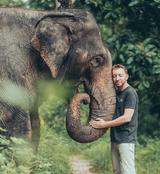
Ethical Elephant Retreats — Spend a day (or more) in an ethical sanctuary near Chiang Mai with no riding, no performances, and no forced interactions. Only presence in the forest, time with elephants, silence, and guided introspection. People leave grounded, emotionally lighter, and more connected to something real.
Private Transformation Sessions — A private conversation over tea in a peaceful garden. Intuitive guidance, emotional clarity work, and honest support for whatever you're navigating — transition, burnout, overwhelm, a major decision, or simply a feeling that you've been living at a distance from yourself. Deep yet natural. Often emotional. Sometimes surprisingly light.
Not traditional tourism. An experience of reconnection.
Explore Baptiste Excelsia experiences →
Frequently Asked Questions About Tak Bat in Chiang Mai
Can tourists participate in tak bat, or should they just watch?
Tourists are genuinely welcome to participate — but "participate" means bringing food offerings and giving them respectfully, not just being present. If you arrive without offerings, watching from a respectful distance is perfectly appropriate and still deeply moving. The key is coming with genuine respect rather than curiosity alone.
What time does tak bat start, and how long does it last?
Tak bat begins at sunrise, which ranges from approximately 5:30 AM in summer (March–May) to 6:30 AM in the cool season (November–February). The ceremony typically lasts 45–60 minutes, after which monks return to their temples for the midday meal. Arrive 20–30 minutes before sunrise to find a good position and settle in before the procession begins.
Is it disrespectful to take photos during tak bat?
Respectful photography is generally acceptable. The key guidelines: no flash, don't position yourself in the monks' path for a shot, don't point a camera directly into a monk's face at close range, and keep your focus primarily on the ceremony rather than on capturing it. Many locals also photograph the ceremony. The issue isn't photography — it's using the ceremony as a backdrop rather than participating in it.
What should I bring, and where do I buy it?
The most appropriate offering is sticky rice (khao niao), available from market vendors near any major temple from around 5:00 AM. You can also bring fresh fruit, small pastries, or cartons of milk. Budget around THB 100–200 ($3–5 USD) for a good set of offerings. Avoid meat, fish, and anything with strong smells.
Do I need to book in advance?
No booking is required for independent participation or watching. Simply arrive early, buy your offerings, and find a position along the route. If you prefer a guided experience, hotel-based tak bat arrangements can usually be made through your concierge 24 hours in advance. Organized tours typically require 1–3 days' notice, particularly during peak season (December–January).
Sources
- My own experience!
- Wat Chedi Luang – Tourism Thailand
- Alms Giving in Chiang Mai – Go Find Orient
- Wat Chiang Man – Renown Travel
Baptiste Excelsia